留下你的信息

How to Buy a 14.4V Lithium Ion Battery Pack in 2026?

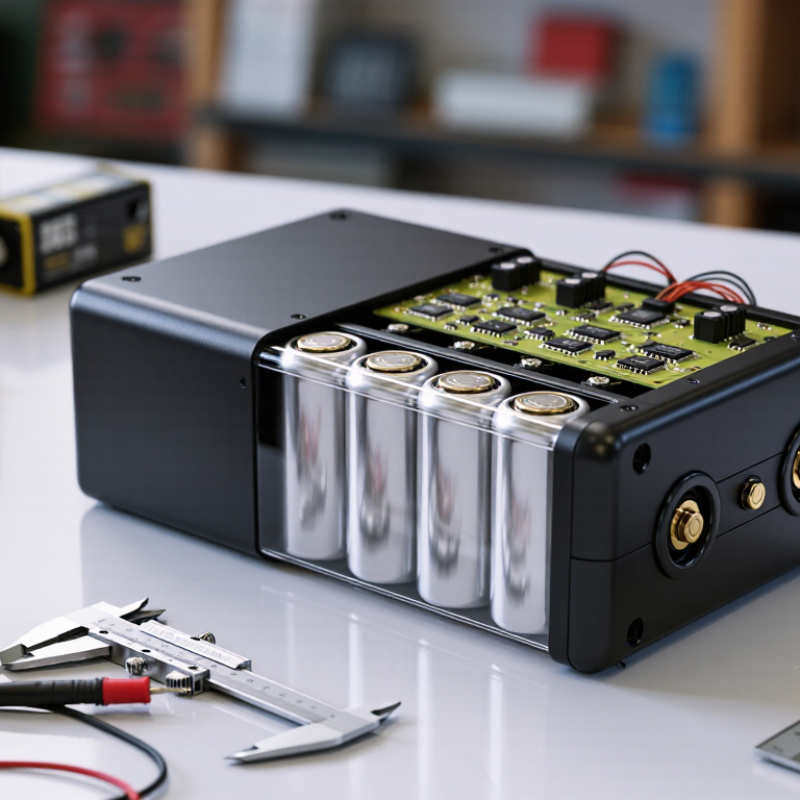
Buying a 14.4v Lithium Ion Battery Pack in 2026 requires more than checking voltage and price. A 14.4V pack commonly uses four lithium-ion cells connected in series. Its full charging voltage may reach 16.8V. Confirm this detail before connecting any equipment.

Dr. Jeff Dahn, a respected lithium-ion battery researcher, has said, “The battery is the most important part of an electric vehicle.” His point applies beyond vehicles. Cell quality, thermal control, and battery management determine practical performance. A reliable pack should list its cell chemistry, capacity, continuous discharge current, charging limits, and protection features. Look for a professionally designed battery management system. It should help prevent overcharge, over-discharge, overheating, and excessive current.

Match the pack to the device’s real requirements. A camera, cordless tool, mobility device, and small robotics project may need different discharge rates. Capacity is measured in amp-hours, but higher capacity usually increases weight and size. Check the connector, dimensions, mounting method, and polarity carefully. A pack that fits electrically may still fail physically.

Do not trust unusually cheap listings. They may provide vague test data or recycled cells. Ask for a datasheet, production date, warranty terms, and safety test information. Certifications can support confidence, but they do not replace careful specification matching. I would also question marketing claims that promise extreme runtime without stating test conditions. Those claims sound impressive. They may still mislead.

A thoughtful purchase balances energy, safety, serviceability, and verified performance. That balance is sometimes overlooked.
How to Buy a 14.4V Lithium Ion Battery Pack in 2026?

Define the Voltage, Capacity, and Form Factor You Need

How to Buy a 14.4V Lithium Ion Battery Pack in 2026?

Define the Voltage, Capacity, and Form Factor You Need

A 14.4V lithium ion pack usually contains four cells connected in series. Its nominal voltage is 14.4V, but full charge reaches about 16.8V. Check your equipment’s voltage range before purchasing. A small voltage mismatch can cause poor performance or permanent damage. Also confirm the required discharge current, especially for motors, pumps, or power tools.

Capacity determines operating time. A 2.5Ah pack stores less energy than a 5Ah pack, while a higher-capacity model may add noticeable weight. Estimate runtime with this simple idea: watt-hours equal voltage multiplied by amp-hours. Do not rely only on advertised capacity. Temperature, battery age, and heavy loads reduce real-world output. I once focused too much on capacity and overlooked the connector position. That mistake made installation awkward.

Tips: Measure the available space carefully. Record length, width, and height in millimeters. Match the connector, polarity, mounting points, and charger specifications. A reliable pack should include suitable protection against overcharge, over-discharge, excessive current, and overheating. Ask for test data when possible. More capacity is not always better.

How to Buy a 14.4V Lithium Ion Battery Pack in 2026? - Define the Voltage, Capacity, and Form Factor You Need

Typical Application Nominal Voltage Cell Configuration Available Capacity Approx. Energy Typical Form Factor Approx. Pack Size Recommended Continuous Discharge Key Buying Requirement
Compact electronics 14.4 V 4S1P
Four cells in series
2.0–3.0 Ah 28.8–43.2 Wh Flat or slim rectangular pack Approximately 70–75 × 37–40 × 20–22 mm 5–10 A Prioritize low height, protected terminals, and a compact battery management system (BMS).
Portable instruments 14.4 V 4S1P
Four high-capacity cylindrical or prismatic cells
3.0–5.0 Ah 43.2–72.0 Wh Rectangular case with cable lead or connector Approximately 90–145 × 40–45 × 20–25 mm 8–15 A Match the connector polarity, cable gauge, mounting points, and available enclosure space.
Cordless tools and power equipment 14.4 V 4S1P or 4S2P 2.0–6.0 Ah 28.8–86.4 Wh Rigid tool-style pack or molded housing Application-specific; allow clearance for airflow and locking features 15–30 A Verify peak current, contact resistance, mechanical locking, and protection against overcurrent.
Robotics and mobile equipment 14.4 V 4S2P or 4S3P 4.0–9.0 Ah 57.6–129.6 Wh Modular rectangular pack with mounting tabs Typically 140–220 × 45–70 × 25–45 mm 15–40 A Check motor start-up current, vibration resistance, thermal monitoring, and secure mechanical mounting.
Extended-runtime equipment 14.4 V 4S3P or custom parallel arrangement 9.0–15.0 Ah 129.6–216.0 Wh Large rectangular pack or external battery module Usually above 200 × 65 × 35 mm 20–40 A Confirm thermal design, transport requirements, charging time, and enclosure ventilation.
Common specifications for all 14.4 V packs 14.4 V nominal
16.8 V fully charged
Normally 4 lithium-ion cells in series Capacity is measured in ampere-hours (Ah) Energy = nominal voltage × capacity Choose the shape after measuring the available space Leave room for insulation, connectors, and thermal expansion Use the load's continuous and peak current, not only its average current Select a charger designed for a 4-series lithium-ion pack and use a suitable BMS.
Values are practical selection ranges for conventional rechargeable lithium-ion chemistry. Actual dimensions, current limits, connector layouts, and protection settings must be confirmed against the equipment manufacturer's requirements and the final battery design.

Compare Cell Chemistry, Configuration, and Battery Management Features

How to Buy a 14.4V Lithium Ion Battery Pack in 2026?

A 14.4V pack usually uses four lithium-ion cells in series. Each cell has a nominal voltage near 3.6V. Its full-charge voltage can reach 16.8V. Check your equipment’s voltage limits carefully. A four-cell lithium iron phosphate pack is different. It normally delivers 12.8V, not 14.4V. Chemistry affects energy density, cycle life, heat tolerance, and charging requirements. Do not choose by voltage alone.

Configuration also controls performance. A 4S1P pack has four cells in series. A 4S2P pack doubles capacity and current capability. Compare the required runtime, continuous current, peak current, dimensions, and connector rating. A larger capacity number is not always better. It may increase weight and charging time. My first comparison focused too much on amp-hours. That was a mistake. Real equipment often needs stable peak power.

Tips: Ask for a cell datasheet and a complete BMS specification. Look for overcharge, over-discharge, short-circuit, overcurrent, and temperature protection. Cell balancing matters too. Passive balancing may suit simple devices, while active balancing can improve consistency in larger packs. Confirm whether the BMS supports charging and discharging simultaneously. Also check thermal sensors and communication features. A printed label is not enough. Request test records when possible, but remember that laboratory results may not match field conditions. Allow safety margin.

Check Compatibility, Safety Certifications, and Charging Requirements

Buying a 14.4V lithium-ion battery pack starts with compatibility, not price.

Check the device manual for operating voltage, capacity, current demand, and connector polarity. A 14.4V pack usually contains four series-connected cells, reaching about 16.8V when fully charged. Confirm that your equipment accepts this voltage range.

Measure the battery compartment carefully. A few millimeters can prevent installation. Compare connector shape, wire position, mounting holes, and protection circuit requirements.

The pack should include a suitable battery management system, or BMS. It helps control overcharge, over-discharge, short circuits, and excessive current. A label alone is not proof of quality. Request a datasheet, production traceability, and recent test documentation. Look for relevant safety certifications, such as IEC or UL testing, when applicable. Certification details should match the exact battery model.

Charging requirements deserve close attention. Use a charger designed for a four-cell lithium-ion pack, with a 16.8V charging limit and compatible charging current. Never substitute a random adapter because its plug fits. Check polarity and charging temperature limits.

Charging on a hard, nonflammable surface is sensible. Stop using the pack if it swells, leaks, smells unusual, or becomes very hot.

I once trusted a convenient label without checking the charger specification. That was careless. I still think compatibility tables can be confusing, especially when manufacturers use different capacity ratings. Recheck every number before ordering.

Evaluate Suppliers, Product Quality, Warranty, and Total Cost

How to Buy a 14.4V Lithium Ion Battery Pack in 2026?

A 14.4V pack usually uses four lithium-ion cells in series. Its full-charge voltage can reach 16.8V. Confirm this before matching the charger or equipment. BloombergNEF’s 2024 Battery Price Survey reported an average lithium-ion pack price of 115 US dollars per kWh. This figure is useful, but small packs often cost more per kWh. Assembly, testing, and protection electronics increase the final price. Ask suppliers for cell specifications, capacity test results, BMS settings, and traceable production records. A polished datasheet is not proof of consistency.

Assembly, testing, and protection electronics increase the final price.

Product quality also depends on safety validation. Request reports aligned with IEC 62133-2 and transport testing under UN 38.3, where applicable. Check capacity at the stated discharge current, not only at a gentle laboratory rate. I have seen low-cost samples lose noticeable capacity under real tools. That mistake can make a cheap quotation expensive. Review the warranty carefully. It should state service life, capacity retention, replacement rules, and response times. A 12-month warranty sounds useful, but hidden exclusions may weaken it.

Tips: Compare total cost, not unit price. Include the charger, shipping, testing, spare packs, and disposal arrangements. Order samples before a volume contract. Record voltage, temperature, runtime, and recharge cycles. BloombergNEF and the International Energy Agency both show falling battery costs, yet market prices do not guarantee better cells. Leave room for inspection and failure analysis. You may otherwise save money twice—on paper, then regret it in operation.

Verify Specifications and Complete the Purchase in 2026

How to Buy a 14.4V Lithium Ion Battery Pack in 2026?

Verify the label before comparing prices. A 14.4V pack usually contains four lithium-ion cells in series. Its full-charge voltage should be about 16.8V. Check capacity in ampere-hours, then calculate energy: 14.4V × Ah equals watt-hours. BloombergNEF’s 2025 Battery Price Survey reported an average lithium-ion pack price of $108 per kWh. Small packs may cost more per watt-hour, so price alone can mislead.

Confirm the continuous discharge current, connector polarity, dimensions, cell configuration, and battery-management protection. Ask for testing conditions behind the claimed cycle life. Also verify transport documentation, production date, warranty terms, and compatibility with your charger. IEC 62133-2 and UN 38.3 are useful safety references, but compliance claims should include traceable test records. The IEA’s Global Critical Minerals Outlook 2025 shows continuing battery-demand growth, which makes supply transparency more important in 2026.

Tips: Photograph the label before ordering. Match the connector carefully. Request a datasheet and a recent inspection record. Avoid packs with vague capacity claims or missing voltage limits. A 14.4V label does not prove identical performance. I once treated capacity as the main buying factor; current capability mattered more under a heavy load. That mistake is easy to repeat.