留下你的信息

China Best E Scooter Lithium Battery Supplier?

Choosing the China Best E Scooter Lithium Battery Supplier? requires more than comparing prices and product photos. A dependable partner should demonstrate practical manufacturing experience, stable quality control, and clear communication. The right E Scooter Lithium Battery must match the scooter’s voltage, capacity, controller, charger, and available installation space. A small mismatch can reduce range or create unnecessary safety risks.

This guide examines how experienced buyers evaluate Chinese battery suppliers. It considers cell quality, battery management systems, thermal protection, enclosure design, waterproofing, and cycle testing. Factory audits, sample orders, and traceable test reports can reveal more than attractive catalogs. Ask how cells are graded, how packs are balanced, and whether each shipment receives documented inspection. Details matter.

The discussion also covers certifications, shipping preparation, warranty terms, customization, and after-sales support. Reliable suppliers should explain their testing process without making vague performance promises. They should also identify limitations honestly, including temperature effects, charging habits, and expected service life. No supplier is perfect. Even a well-designed pack may need revision after field testing. A careful comparison should include response speed, technical documentation, production consistency, and the supplier’s willingness to correct problems. In this market, the strongest choice is not always the cheapest one. It is the partner that can support safe, repeatable, and verifiable battery performance over time.

China Best E Scooter Lithium Battery Supplier?

What Makes a Reliable Lithium Battery Supplier for E-Scooters?

China Best E Scooter Lithium Battery Supplier?

What Makes a Reliable Lithium Battery Supplier for E-Scooters?

A reliable supplier does more than quote capacity and price. It can explain how each battery pack is built, tested, and traced. Ask for batch records and clear specifications for voltage, capacity, and operating temperature. On an e-scooter, the battery experiences vibration, curb impacts, moisture, and repeated charging. Testing should reflect these conditions, not just a brief bench check. Ask how the battery management system responds to overcharging, excessive current, and high or low temperatures. Details matter.

Useful evidence is specific: test methods, sample sizes, pass criteria, and dated reports. Request cycle-life results with the charging conditions stated; numbers without context are hard to compare. A factory visit or independent inspection can help, but a small trial order also reveals packaging quality, labeling, and response speed. Keep a delivered sample and compare its measured capacity with the agreed specification. Ask who investigates failures and records corrective actions. No supplier is flawless. A supplier that admits limitations, answers technical questions clearly, and documents changes is easier to assess than one promising exceptional service life without evidence.
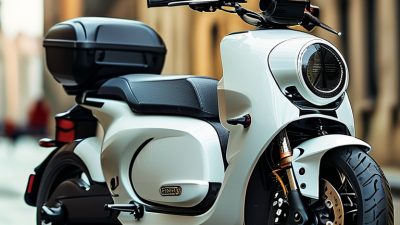

Key Battery Types Used in Electric Scooters

China Best E Scooter Lithium Battery Supplier?
Key Battery Types Used in Electric Scooters

Electric scooters commonly use lithium-ion batteries, especially NMC or LFP, while some older or lower-cost models use lead-acid batteries. NMC packs can provide more energy in a compact space, useful when the scooter deck is small. LFP is often chosen for its durability and thermal stability, but its lower energy density may mean extra weight or volume. No chemistry wins everywhere. The IEA’s Global EV Outlook 2024 reports that LFP held nearly 40% of the global electric-car battery market in 2023. That is useful context, not a scooter-specific market share.

Lead-acid batteries may cost less upfront, but they are heavier and generally have shorter cycle lives. For lithium-ion packs, buyers should check voltage, capacity, discharge current, dimensions, and battery-management protections. A pack that fits the compartment may still be poorly matched to the motor’s current demand. Fit matters, too. The IEA reported that average lithium-ion battery prices fell 14% in 2023, but lower cell prices alone do not guarantee a reliable pack. Ask suppliers for test records and clear chemistry specifications. I would still verify how those tests reflect real riding conditions; the data sheet rarely tells the whole story.

How to Evaluate Battery Quality, Safety, and Performance

China Best E Scooter Lithium Battery Supplier?

How to Evaluate Battery Quality, Safety, and Performance

A reliable scooter battery is more than a capacity figure on a datasheet. Check cell-level traceability, batch consistency, and test results under stated conditions. Ask how the pack performs under load, not only at room temperature. Voltage sag on a steep climb can reveal weaknesses that a bench-top capacity test misses.

The International Energy Agency’s Global EV Outlook 2024 reports that electric-vehicle battery demand reached about 750 GWh in 2023, roughly 40% above 2022. That growth makes clear, comparable supplier data especially useful. It does not prove any individual pack is dependable. Compare cycle-life results alongside test temperature, discharge rate, and the capacity-retention threshold. Numbers need context.

For safety, review the battery management system’s overcharge, overcurrent, and temperature protections, and request independent test documentation. Check that samples match production specifications; a polished sample may not represent every shipment. Ask for evidence of pack-level thermal and vibration testing, plus warranty failure data where available. No single certificate guarantees real-world performance. I would also ask how the supplier investigates a returned pack—because a neat datasheet cannot explain every failure in daily use.

China Best E Scooter Lithium Battery Supplier? - How to Evaluate Battery Quality, Safety, and Performance

Use this checklist to compare suppliers of lithium-ion batteries for electric scooters. The suggested evaluation guides below are screening points, not substitutes for applicable regulations, product-specific specifications, or independent testing.

Evaluation area What to verify Evidence to request Practical evaluation guide
Cell identity and traceability Confirm cell manufacturer, model, chemistry, production lot, and whether cells are new and consistently sourced. Cell datasheet, purchase and batch records, incoming-inspection records, and pack serial-number traceability. The cell model and chemistry should match the approved battery design and remain traceable from cell lot to finished pack.
Capacity and energy Check rated voltage, ampere-hours (Ah), watt-hours (Wh), test conditions, and measurement tolerance. Watt-hours are calculated as nominal voltage multiplied by ampere-hours. Pack specification, cell configuration, and capacity-test report identifying discharge current, temperature, and cutoff voltage. Compare packs only when test conditions and stated units are equivalent; request measured results for production samples, not only design values.
Pack consistency and workmanship Review cell matching, weld quality, insulation, wiring, connectors, enclosure fit, and protection against moisture or vibration where required by the application. Assembly drawings, quality-control plan, inspection records, and representative teardown or production-sample inspection. Look for documented, repeatable controls and a pack design validated for the scooter’s electrical and mechanical requirements.
Battery management system (BMS) Check overcharge, over-discharge, overcurrent, short-circuit, and temperature protections, plus cell balancing where applicable. BMS specification, protection thresholds, test results, and explanation of how the BMS interacts with the charger and vehicle. Protection settings must be appropriate for the selected cell chemistry and pack design; avoid applying generic voltage thresholds across different chemistries.
Safety testing and standards Check which standards and regulatory requirements apply to the intended market and product. Examples include UL 2271 for light electric vehicle batteries, UL 2849 for e-bike electrical systems, and EN 50604-1 for lithium batteries for light electric vehicles. Full test reports or verifiable certificates showing the exact model, configuration, test laboratory, standard edition, and report scope. Confirm that evidence covers the offered battery or system. A component certificate alone may not establish compliance of the complete vehicle or pack.
Transport compliance Lithium batteries shipped internationally are subject to applicable dangerous-goods rules and UN Manual of Tests and Criteria, subsection 38.3 requirements. UN 38.3 test summary for the relevant battery type and confirmation of shipping classification and packaging arrangements. UN 38.3 relates to transport testing; it is not, by itself, a general product-safety certification.
Operating and charging limits Verify the specified charge and discharge temperature ranges, maximum current, storage conditions, and compatible charger requirements. Cell and pack datasheets, charger specification, user instructions, and temperature-protection test records. Use limits stated for the exact cell and pack design. Charging-temperature limits vary by cell and must not be assumed from a generic range.
Cycle life and capacity retention Ask how cycle life is defined, including charge/discharge rate, temperature, depth of discharge, and end-of-life capacity threshold. Cycle-test report for the proposed cell or pack, with test conditions and capacity-versus-cycle data. Compare cycle-life claims only under comparable conditions; there is no single cycle-life figure that applies to every lithium-ion battery.
Production quality system Review incoming inspection, in-process checks, final testing, nonconformance handling, and change control for cells and components. Quality-system certificate where applicable, audit results, sample inspection records, and written notification procedures for design changes. A documented process and consistent production records are more useful than a certificate alone; verify the scope and current validity of any certificate.
Warranty and after-sales support Clarify warranty duration, exclusions, claim procedure, replacement policy, spare-part availability, and technical response arrangements. Written warranty terms, service process, and a defined method for investigating returned battery failures. Treat warranty as a commercial and support factor, not proof of battery safety or performance.

Supplier comparison tip: Compare the same pack voltage, usable energy, current capability, operating limits, test conditions, and certification scope. Request documentation for the exact production configuration being quoted.

China’s E-Scooter Lithium Battery Manufacturing Process

China Best E Scooter Lithium Battery Supplier?

China’s E-Scooter Lithium Battery Manufacturing Process

A reliable e-scooter battery begins with careful cell inspection. Technicians check cell voltage, appearance, and internal resistance before assembly. Cells with similar readings are grouped together to support balanced performance. Small differences matter.

The battery management system is then matched to the pack’s voltage and current requirements. Cells are connected using controlled welding, while insulation sheets help prevent accidental contact between conductive parts. Workers secure the wiring and inspect each connection. It is precise work, but not infallible; a rushed inspection can miss a weak joint.

The assembled pack goes through electrical checks, including charge, discharge, and protection tests. Depending on the design, manufacturers may also assess temperature behavior and vibration resistance. These checks help reveal problems before the battery reaches a scooter. A tidy test report is useful, but it cannot reproduce every pothole, wet commute, or repeated hard stop. Ask suppliers how they track cell batches, record test results, and handle failed units. Manufacturing quality is not one machine or one final inspection. It depends on consistent process control at every stage.

Choosing the Right Supplier for Your E-Scooter Project

China Best E Scooter Lithium Battery Supplier?
Choosing the Right Supplier for Your E-Scooter Project

The right supplier starts with your scooter’s actual duty cycle, not a catalogue claim. Define pack voltage, capacity, peak current, enclosure dimensions, and daily distance before comparing quotations. Small details matter. A connector that sits two millimetres too high can complicate assembly.

The IEA’s Global EV Outlook 2024 reports that electric vehicle battery demand exceeded 750 GWh in 2023, roughly 40% above 2022. This broad market figure is not a scooter-pack forecast, but it shows why traceable cells and steady production controls matter. Ask suppliers for cell-batch records, cycle-test conditions, capacity-retention results, and battery management system protections. Request sample packs and verify fit, charging behaviour, and heat under your own test conditions.

Price needs context. BloombergNEF’s 2023 Battery Price Survey put the average lithium-ion pack price at 139 US dollars per kWh, down 14% year over year. That is a market benchmark, not a fair quote for a custom scooter pack; volume, housing, electronics, and testing change costs. A low offer can still hide weak documentation or unclear warranty terms. I would check those twice. Ask how defects are handled, which tests apply to the finished pack, and whether production lead times are written into the agreement.

Choosing a Lithium Battery Supplier for Your E-Scooter Project

Typical nominal cell voltage varies by chemistry: LFP is about 3.2 V, NMC and NCA about 3.6 V, and LTO about 2.3 V. These are reference values, not supplier performance ratings. When evaluating suppliers, also verify pack-level safety, capacity, cycle-life test results, and compliance with applicable standards.