Essential Tips for Choosing Electric Bike Lithium Ion Battery
Choosing the right Electric Bike Lithium Ion Battery is crucial for performance and longevity. According to a 2022 report from the Electric Bike Industry, the global electric bike market is projected to grow to $38.3 billion by 2025. Battery selection plays a key role in this growth. A quality lithium-ion battery significantly impacts energy efficiency and ride range.
Battery specifications can be confusing. Understanding voltage, amp-hours, and watt-hours is essential. For instance, a 36V battery with 12Ah capacity delivers 432 watt-hours of energy. This can affect how far you ride on a single charge. However, not all batteries are created equal. There are variations in quality and performance.
Consumers often overlook the importance of battery management systems. These systems protect against overcharging and overheating. Reports indicate that up to 30% of batteries fail prematurely due to inadequate management systems. Selecting an Electric Bike Lithium Ion Battery with a solid battery management system can be a game changer in ensuring safety and efficiency.
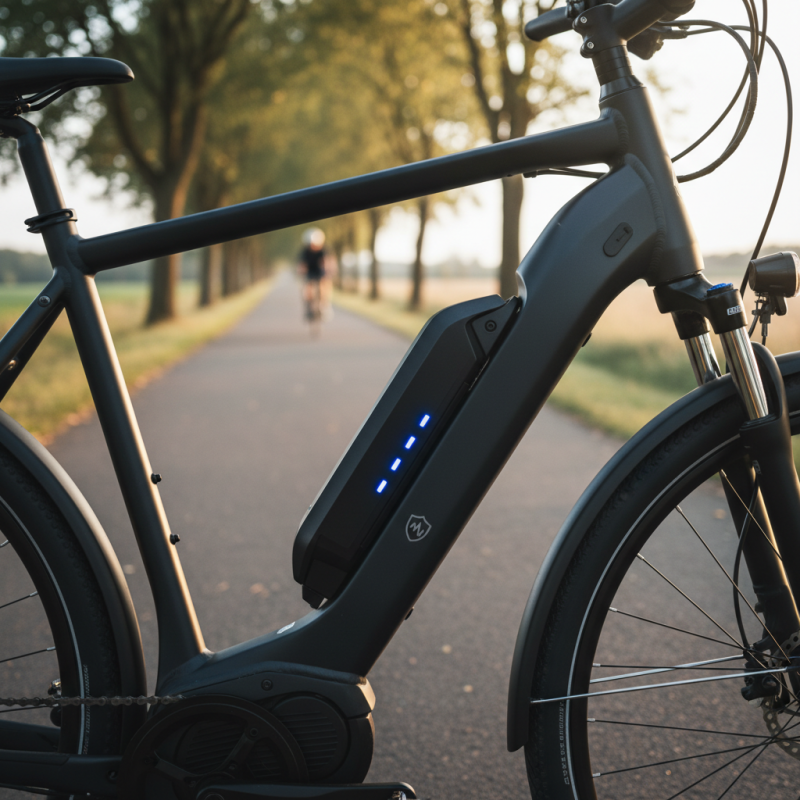
Understanding Lithium Ion Batteries for Electric Bikes
When exploring lithium-ion batteries for electric bikes, understanding their characteristics is crucial. These batteries are favored for their high energy density, meaning they store more energy relative to their weight. According to industry reports, lithium-ion batteries can provide up to 250 Wh/kg. This efficiency allows for longer rides and reduced weight on electric bikes.
It's essential to consider the battery's lifespan. Most lithium-ion batteries last between 500 to 1,000 charge cycles, depending on usage and maintenance. Proper care can extend this lifespan. For instance, avoid depleting the battery completely before recharging. It’s also beneficial to keep the battery at room temperature to enhance performance and longevity.
Tips: Pay attention to the battery's capacity. A higher capacity equates to a longer travel range. Also, check the Charge/Discharge Rate, which impacts how quickly the battery charges and powers the bike. Regularly monitor the battery's health through performance charts or metrics to ensure reliability and efficiency.
Performance Comparison of Lithium-Ion Batteries for Electric Bikes
Key Factors to Consider When Choosing a Lithium Ion Battery
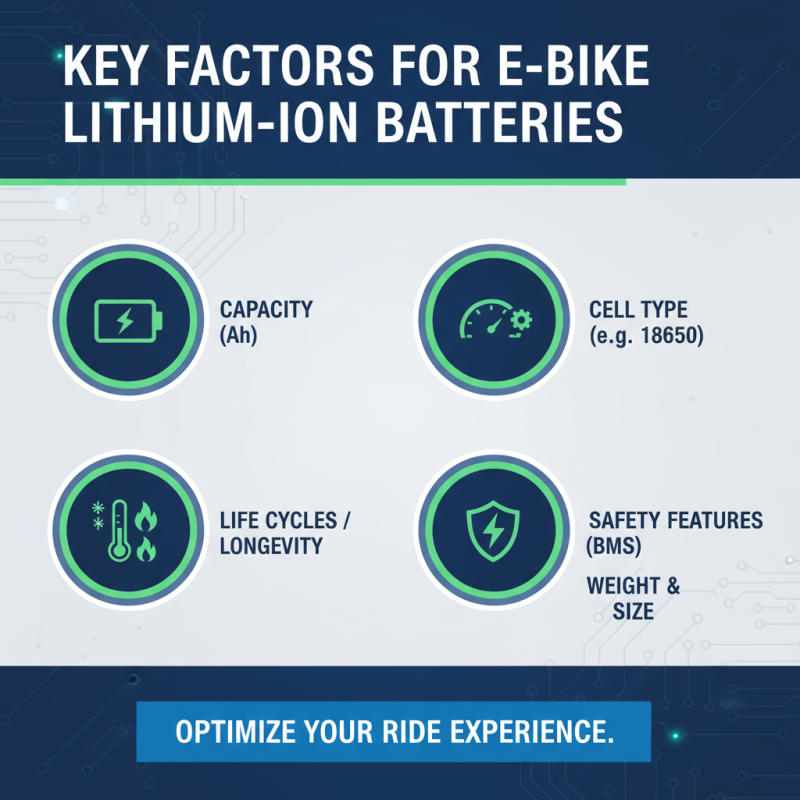
Choosing the right lithium-ion battery for your electric bike is crucial. Several key factors impact performance and longevity. Understanding these factors can lead to a more satisfying riding experience.
Battery capacity is one of the most important considerations. Look for a battery with a higher amp-hour (Ah) rating. According to industry reports, batteries with 10Ah to 20Ah can typically provide a range of 30 to 70 miles on a single charge. However, larger capacities may increase weight. It’s essential to balance capacity with bike weight.
The quality of lithium-ion cells should not be overlooked. High-quality cells often lead to better efficiency and longer lifespan. Research indicates that quality batteries can last over 1,000 charge cycles. Lower-quality cells may degrade much earlier, affecting performance and distance potential. Be sure to check specifications to ensure reliability.
Additionally, consider the battery management system (BMS). A good BMS protects battery cells and enhances safety. Without proper management, batteries may overheat, risking damage and reducing lifespan. Users often ignore this aspect, leading to potential failures. Make educated choices to avoid these pitfalls.
Evaluating Battery Capacity and Range for Your Electric Bike
When choosing an electric bike lithium-ion battery, evaluating capacity and range is crucial.
Battery capacity is measured in amp-hours (Ah). A higher Ah rating indicates a more powerful battery. This means longer rides without needing a recharge.
For regular commuters, a capacity of at least 12 Ah is recommended. However, some riders may find this insufficient for longer trips.
Range is another vital factor. It refers to the distance a bike can travel on a single charge.
Factors like terrain, rider weight, and assist level can affect this. On flat surfaces, a battery might last longer.
But inclines can drain the battery quickly. Many riders often underestimate how terrain impacts performance.
Testing your bike's range in real-world conditions is essential. It can reveal unexpected limitations.
An overlooked aspect is the effectiveness of regenerative braking.
It can extend range slightly by recharging the battery during descents. However, the benefits may be minimal.
Riders should not rely solely on this feature. Judging your battery's performance requires hands-on experience.
Each rider's needs are unique, making this evaluation process subjective.
Always reflect on your specific requirements before purchasing.
Assessing Battery Quality and Lifespan for Optimal Performance
When considering an electric bike lithium-ion battery, assessing its quality and lifespan is crucial. A battery's performance directly impacts your riding experience. High-quality batteries may last longer and provide consistent power during your rides. Look for certifications or standards that demonstrate reliability. These can often indicate a battery's ability to perform over time.
Pay attention to the battery's cycle life. This refers to how many charge and discharge cycles the battery can handle before losing capacity. Quality batteries often have higher cycle lives—typically between 500 to 1,500 cycles. A good rule of thumb is to seek batteries with a minimum of 800 cycles.
It's important to remember that even the best batteries degrade over time. Factors like temperature and charging habits influence lifespan. Keeping your battery within recommended temperature ranges can help maintain its health. Furthermore, avoid deep discharges; they can shorten battery life significantly. Overall, focusing on these details can ensure you choose a battery that enhances your electric biking experience.
Essential Tips for Choosing Electric Bike Lithium Ion Battery - Assessing Battery Quality and Lifespan for Optimal Performance
| Battery Type |
Voltage (V) |
Capacity (Ah) |
Energy (Wh) |
Cycle Life |
Charging Time (hrs) |
Weight (kg) |
| Lithium-Ion |
36V |
10Ah |
360Wh |
500-800 cycles |
4-6 hrs |
2.5 kg |
| Lithium Polymer |
48V |
12Ah |
576Wh |
300-500 cycles |
5-7 hrs |
2.8 kg |
| Lithium Iron Phosphate |
36V |
15Ah |
540Wh |
2000-4000 cycles |
6-8 hrs |
3.5 kg |