2026 How to Choose the Right E Scooter Lithium Battery for Optimal Performance?
As urban transportation evolves, the demand for efficient commuting solutions grows. E scooters have become popular, but their performance largely depends on the choice of the E Scooter Lithium Battery. A study by the International Council on Clean Transportation highlights that electric scooters can reduce emissions by 50% compared to gasoline-powered vehicles. However, the right battery is crucial for maximizing this potential.
The lifespan and performance of an E scooter are directly linked to its lithium battery. Industry research shows that the right battery can significantly enhance range and efficiency. Yet, many users overlook battery specifications. Choosing an inferior battery can lead to reduced performance and shorter lifespan.
Battery chemistry and capacity play vital roles in scooter functionality. Some users might opt for lower-cost options, but this choice could impact efficiency. Potential customers should be wary of these trade-offs. Understanding the nuances of E Scooter Lithium Batteries is essential for a fulfilling riding experience.
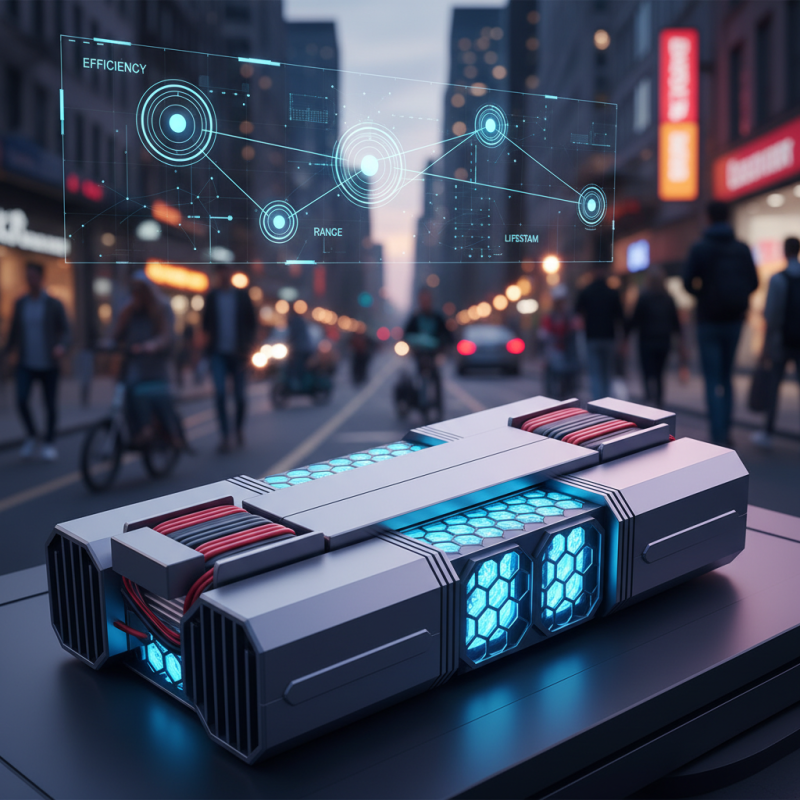
Understanding the Importance of Lithium Batteries in E-Scooters
Lithium batteries play a critical role in the performance of e-scooters. Their lightweight design allows for easier handling and better efficiency. Unlike traditional batteries, lithium models provide a higher energy density, extending the riding range effectively. This feature is especially important for urban commuters who rely on e-scooters for daily travel. A battery’s performance is heavily influenced by its quality, affecting everything from speed to charging time.
When selecting a lithium battery, consider its capacity. Measured in amp-hours (Ah), this dictates how long your scooter can operate on a single charge. A higher capacity often translates to longer rides. However, it’s essential to balance this against weight and size; larger batteries can also make the scooter bulkier. The construction material is also vital. Look for high-quality cells that ensure longevity and safety.
Remember, not all lithium batteries are created equal. Some may degrade faster, affecting performance over time. Regular maintenance is also key. Checking for any signs of wear can prevent unexpected issues. Riders should stay informed about maintenance needs to maximize battery lifespan. Understanding these factors can help you choose the right battery for an enhanced riding experience.
2026 How to Choose the Right E-Scooter Lithium Battery for Optimal Performance?
Understanding the Importance of Lithium Batteries in E-Scooters
Types of Lithium Batteries Suitable for E-Scooters
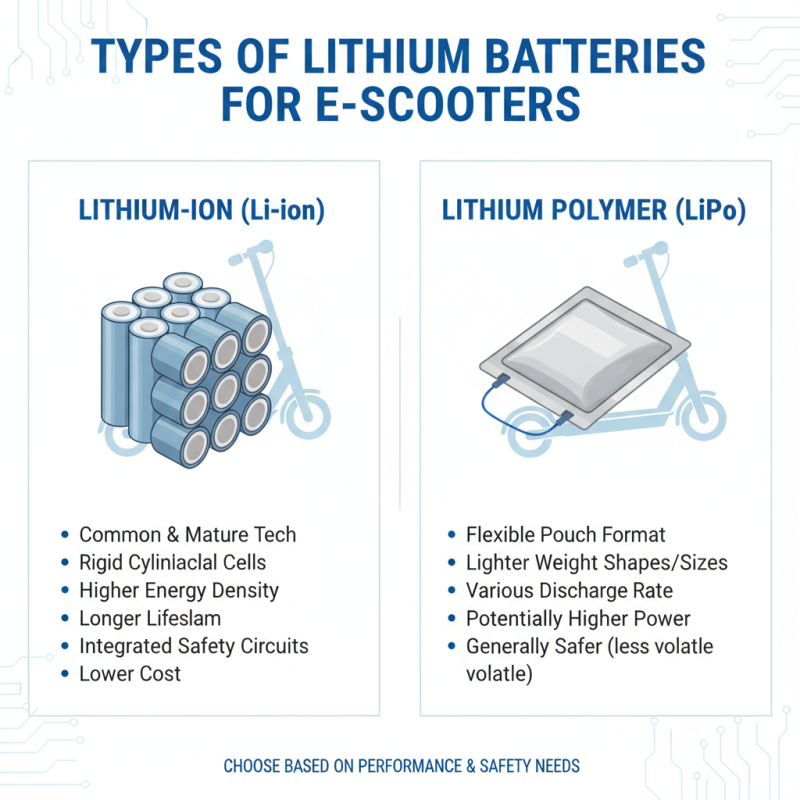
Selecting the right lithium battery for an e-scooter is crucial for performance. Several types of lithium batteries are suitable for e-scooters. The most common ones include Lithium-ion (Li-ion) and Lithium Polymer (LiPo). Both types have distinct advantages and limitations.
Lithium-ion batteries typically offer higher energy density. They can store more power while being lighter in weight, which enhances the overall efficiency of e-scooters. According to a report by IDTechEx, Li-ion batteries account for over 60% of the e-scooter market due to their reliability. However, they generally have a longer charging time, which can be inconvenient for users who need quick turnaround.
On the other hand, Lithium Polymer batteries are known for their flexibility in shapes and sizes. They can be molded to fit compact spaces effectively. Although they provide excellent discharge rates, their life cycle is often shorter than that of Li-ion batteries. Research suggests that they can decline in performance sooner, which might lead to more frequent replacements. This highlights the importance of considering both performance and long-term costs when making a decision.
Key Factors to Consider When Choosing a Lithium Battery
Choosing the right lithium battery for an e-scooter can significantly impact its performance. Several key factors can guide this process. Battery capacity is one of the most crucial aspects. Measured in ampere-hours (Ah), it directly influences how far the scooter can travel per charge. A report from the International Energy Agency indicates that batteries with higher capacities provide better range, which can be a game-changer for daily commuters.
Another important factor is discharge rate. This metric, often expressed in a C-rate, determines how quickly a battery can release its stored energy. For instance, a battery with a discharge rate of 1C can fully discharge in one hour. Higher discharge rates are necessary for e-scooters that require quick acceleration. However, this can sometimes lead to reduced battery life, showing the delicate balance between performance and longevity.
Temperature tolerance also plays a vital role. Lithium batteries function optimally within certain temperature ranges. Reports suggest that exposure to extreme temperatures can lead to diminished performance or even battery failure. Thus, understanding local climate conditions is crucial when choosing a battery. It’s essential to weigh these factors as decisions may require trade-offs, impacting the overall riding experience.
Performance Metrics to Assess in E-Scooter Batteries
When selecting a lithium battery for your e-scooter, performance metrics are crucial. Key factors include energy density, cycle life, and discharge rate. According to the Battery University, a typical lithium-ion battery can have an energy density of 150 to 250 Wh/kg. Higher energy density means more range. For e-scooter users, this translates to longer rides without frequent charging.
Cycle life matters greatly too. Most lithium batteries provide between 500 to 1,500 cycles before significant capacity loss occurs. If you plan to use your e-scooter daily, a battery with at least 1,000 cycles is recommended. Meanwhile, the discharge rate affects acceleration and performance during rides. For optimal performance, look for batteries with a discharge rate of at least 1C.
However, balancing these metrics can be challenging. Some high-energy-density batteries may have shorter cycle lives. This trade-off requires reflection. Choosing a battery that meets your riding needs without sacrificing longevity is crucial. E-scooter users must weigh these factors carefully to find the best match for their commuting style. Knowing your priorities will lead to better choices.
2026 How to Choose the Right E Scooter Lithium Battery for Optimal Performance? - Performance Metrics to Assess in E-Scooter Batteries
| Battery Type |
Capacity (Ah) |
Voltage (V) |
Energy Density (Wh/kg) |
Charging Time (hrs) |
Cycle Life |
Weight (kg) |
| Lithium-ion |
10 |
36 |
250 |
4 |
500 |
2.5 |
| Lithium Polymer |
12 |
36 |
220 |
3 |
800 |
1.8 |
| NMC (Nickel Manganese Cobalt) |
15 |
48 |
300 |
5 |
1000 |
3.0 |
| LFP (Lithium Iron Phosphate) |
20 |
48 |
140 |
6 |
2000 |
5.0 |
Maintenance Tips for Maximizing E-Scooter Battery Lifespan
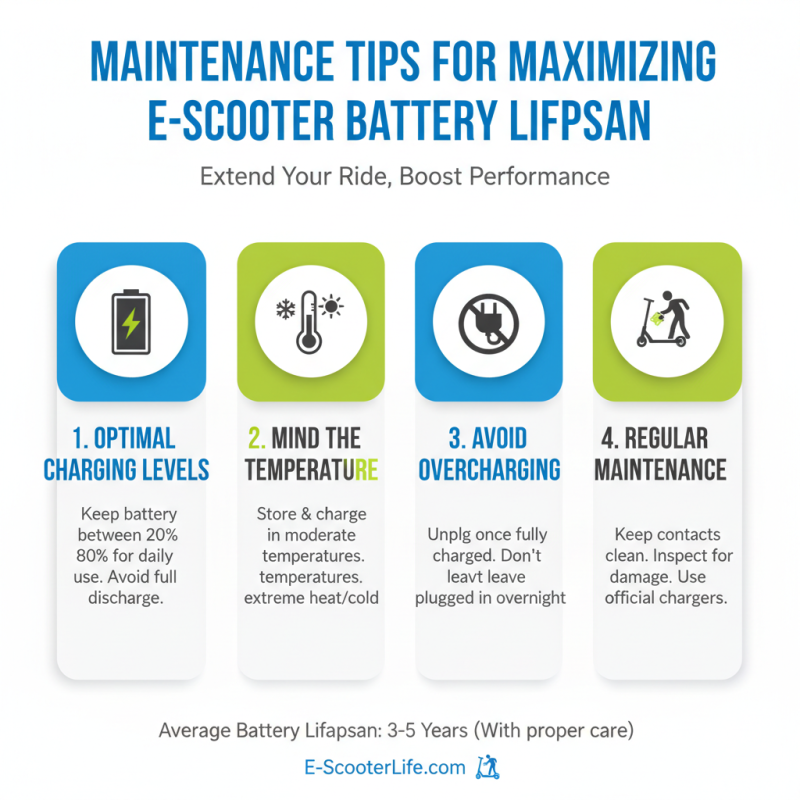
When it comes to e-scooters, battery health directly impacts performance. Regular maintenance is crucial for extending the lifespan of lithium batteries. According to industry reports, optimal battery lifespan averages around three to five years. However, this can vary based on usage and care.
One essential tip is to avoid overcharging your battery. Many users overlook this detail, thinking it ensures full capacity. However, overcharging can lead to decreased battery efficiency over time. Aim for a charge level between 20% and 80% for the best results.
Temperature regulation also plays a significant role. Lithium batteries are sensitive to extreme temperatures. Keeping your battery in a cool, dry place can enhance performance and longevity. Paradoxically, while some riders may think using the battery in high heat boosts speed, it can cause irreversible damage.
Regular cleaning of battery contacts can prevent corrosion and improve connectivity. Neglecting this maintenance step might lead to inconsistent performance. It's essential to check connections periodically and clean them carefully to ensure reliable operation. By following these tips, riders can enjoy safer and longer rides.