How to Choose the Best Lawn Mower Battery for Your Needs?
Choosing the right Lawn Mower Battery can significantly impact your mowing experience. A good battery ensures efficiency and effectiveness in maintaining your lawn. However, the market is saturated with options, making the choice overwhelming.
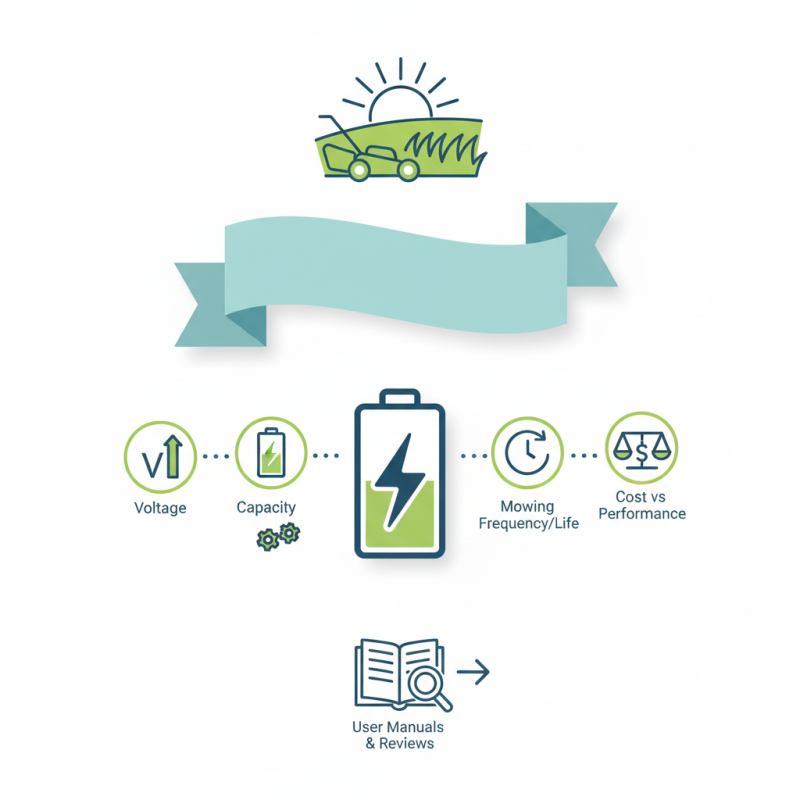
Consider factors like voltage, capacity, and compatibility. Each lawn mower requires a specific battery type, making it essential to identify your mower's needs. Don’t hesitate to consult user manuals or product reviews to gain insights. Sometimes, what seems perfect may not fit your mower.
Reflecting on personal preferences can lead to better choices. Think about how often you mow and what battery life you need. A battery that lasts long is great, but it may come with a higher price tag. Balancing cost and performance is crucial. Every decision you make should reflect your unique lawn care needs.
Understanding Different Types of Lawn Mower Batteries
When selecting a lawn mower battery, it's essential to understand the different types available. Generally, you'll encounter two main types: lead-acid batteries and lithium-ion batteries. Lead-acid batteries are cheaper and reliable. However, they can be heavier and require regular maintenance. They also have a shorter lifespan compared to their lithium counterparts.
On the other hand, lithium-ion batteries are becoming increasingly popular. They are lighter and provide longer run times. They also charge faster, which can be a significant plus during busy seasons. However, they come with a higher price tag. Some users may overlook their benefits due to initial costs, but their longevity often compensates over time.
Choosing the right battery depends on multiple factors. Consider the size of your lawn and how often you mow. A smaller lawn could benefit from a lead-acid battery, while larger spaces might require a lithium-ion solution. Reflecting on your mowing habits helps ensure you select the best battery type for your needs. It’s not just about cost but long-term efficiency and reliability.
Assessing Battery Capacity and Power Requirements
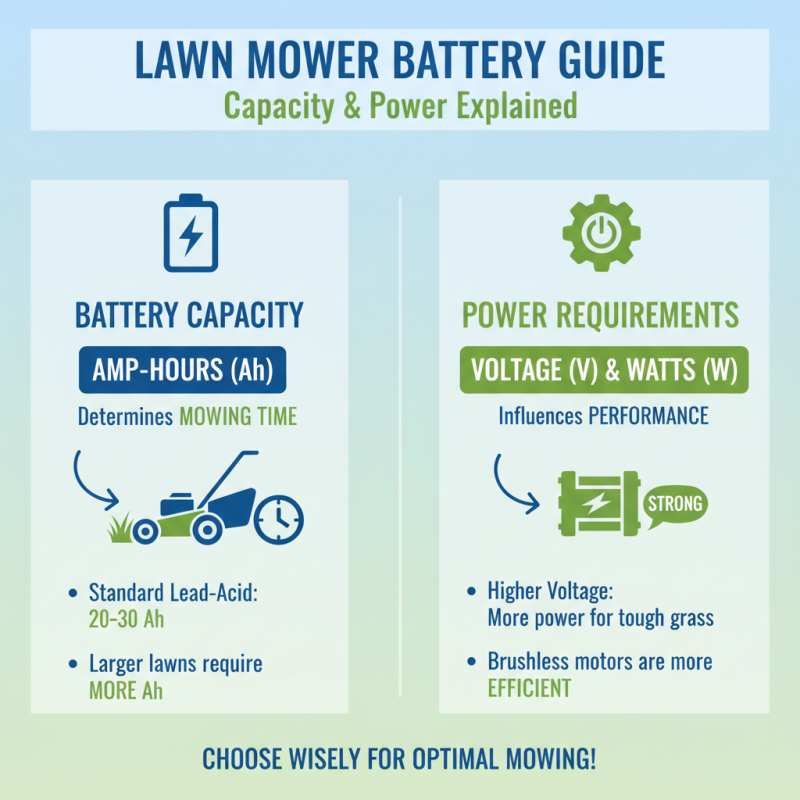
Choosing the right lawn mower battery is crucial. Battery capacity and power requirements greatly influence performance. With varying sizes and types, understanding these metrics is essential. For instance, a standard lead-acid battery typically offers 20-30 amp-hours. This capacity can affect mowing time on a single charge.
Power requirements depend on lawn size and mowing frequency. Smaller lawns may only need a 36V system, while larger areas often require 48V or higher. A study by the Office of Energy Efficiency & Renewable Energy noted that battery efficiency decreases with age, impacting performance.
Assessing your specific needs is equally important. If you frequently mow thick grass or tackle steep terrains, consider a battery with higher wattage. Monitoring the battery's charge cycle is vital; most last between 300-500 cycles. Longevity impacts overall cost, and poor choices might lead to regret later on. Be mindful of compatibility with your mower as well.
Evaluating Compatibility with Your Lawn Mower
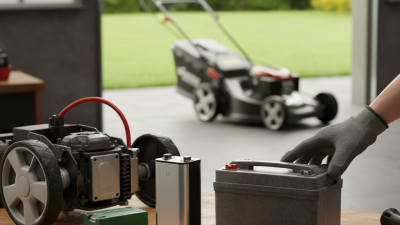
When selecting a lawn mower battery, compatibility is crucial. Before purchasing, check the mower's specifications. Look for battery type, size, and voltage requirements. Many mowers use lead-acid or lithium-ion batteries. Each type has its advantages and drawbacks. Lead-acid batteries are cost-effective but heavier. Lithium-ion options offer longer life and lighter weight.
Evaluate how the battery connects to your mower. Pay attention to terminal types and configurations. Some mowers require specific connectors. If it does not fit, you may face issues with operation. Also, consider the battery's amp-hour rating. This rating affects runtime and power. A higher amp-hour rating provides longer mowing sessions.
Lastly, don’t overlook the charging capabilities. Some batteries require specific chargers, while others can use universal ones. Ensure the charger is matched to avoid damaging the battery. This choice can lead to frustrations if overlooked. Reviewing these aspects carefully minimizes the risk of purchasing an incompatible battery and enhances your mowing experience.
Considering Battery Lifespan and Maintenance Needs
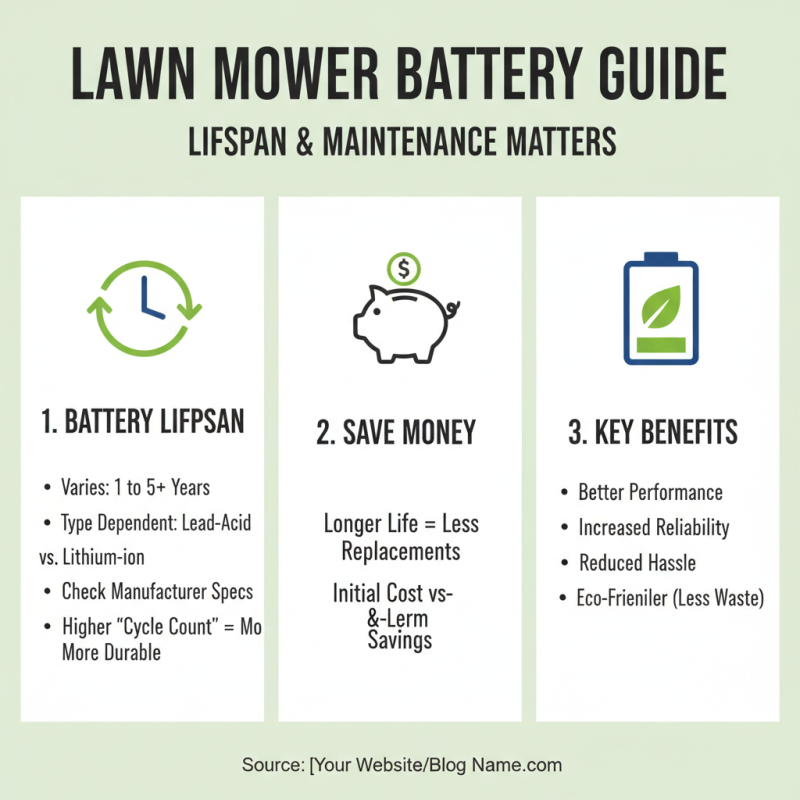
When selecting a lawn mower battery, consider its lifespan carefully. A battery that lasts longer saves you money over time. Most batteries have a specified lifespan. This can range from one year to several years, depending on the type. Check the manufacturer’s guidelines for details on longevity. Look for batteries with a higher cycle count. A higher cycle count indicates better durability and performance.
Maintenance needs are another critical factor. Some batteries require more attention than others. Lead-acid batteries, for instance, need regular water checks. Neglecting this can shorten their lifespan. On the other hand, lithium-ion batteries often require less maintenance. They can be more user-friendly. However, they can also have issues if not charged properly. Always follow charging instructions closely.
Finding the right balance between lifespan and maintenance is essential. Reflect on how often you use your lawn mower. If it’s a frequent task, invest in a longer-lasting battery. If you mow only occasionally, a basic model may suffice. Design your choice based on your usage patterns. Various battery types may suit your needs, but reflect on your specific situation.
Budgeting for Lawn Mower Battery Replacement Options
When budgeting for lawn mower battery replacement, consider various factors that impact costs. The average price range for a lawn mower battery is between $40 and $200, depending on the type and brand. Lithium-ion batteries are typically more expensive but offer longer lifespans and better performance. A report from the Battery University highlights that lithium batteries can last up to 3,000 charge cycles, compared to just 500 cycles for lead-acid batteries. This data is essential for making a cost-effective decision based on long-term usage.
Additionally, think about the total cost of ownership. Maintenance plays a crucial role in your budget. Regular upkeep can extend battery life but may incur additional costs. For example, proper charging practices and climate control can significantly influence performance. A study from the Electric Power Research Institute (EPRI) found that improper charging can decrease battery efficiency by 20% over time. This means careful attention to usage habits is worth the investment.
Many users overlook hidden costs, like disposal fees or recycling options for old batteries. These expenses can add up quickly. Understanding these details can help you avoid unexpected surprises. Make your choices wisely and prioritize options that align with your needs and budget constraints. The right battery will not only serve you well but also help avoid future costs.
Battery Types and Their Estimated Lifespan