Choosing China’s best High And Low Temperature Lithium Batteries requires more than comparing nominal capacity or price. A reliable battery must start consistently in freezing air and remain stable under intense heat. The China Association of Automobile Manufacturers reported that China produced over 12 million new-energy vehicles in 2023. This scale has accelerated battery research, testing, and manufacturing experience. However, production volume alone does not prove superior temperature performance.
The International Energy Agency’s Global EV Outlook 2024 stated that China supplied more than 75% of global battery cells in 2023. That industrial advantage supports wider access to lithium iron phosphate and nickel-manganese-cobalt technologies. Yet chemistry creates trade-offs. LFP batteries generally offer strong thermal stability and long cycle life. NMC cells can provide higher energy density but may require stricter thermal management. These differences matter at a mountain charging station or inside a parked vehicle under summer sunlight.
Real evidence matters more.
IEC 62620 and UL 1642 provide important testing and safety references for rechargeable lithium cells. They do not identify one universally “best” supplier. Buyers should examine discharge curves, charging limits, cycle-life results, and thermal-abuse testing. Test conditions must be visible, including temperatures, load currents, and recovery time. Many product comparisons omit these details. That is a serious weakness. A battery claiming operation from minus 40 to 60 degrees Celsius may still deliver reduced capacity at both extremes. This article examines China’s leading High And Low Temperature Lithium Batteries through performance data, manufacturing capability, quality controls, and application fit. The final choice should match the equipment, climate, and risk tolerance—not marketing language.
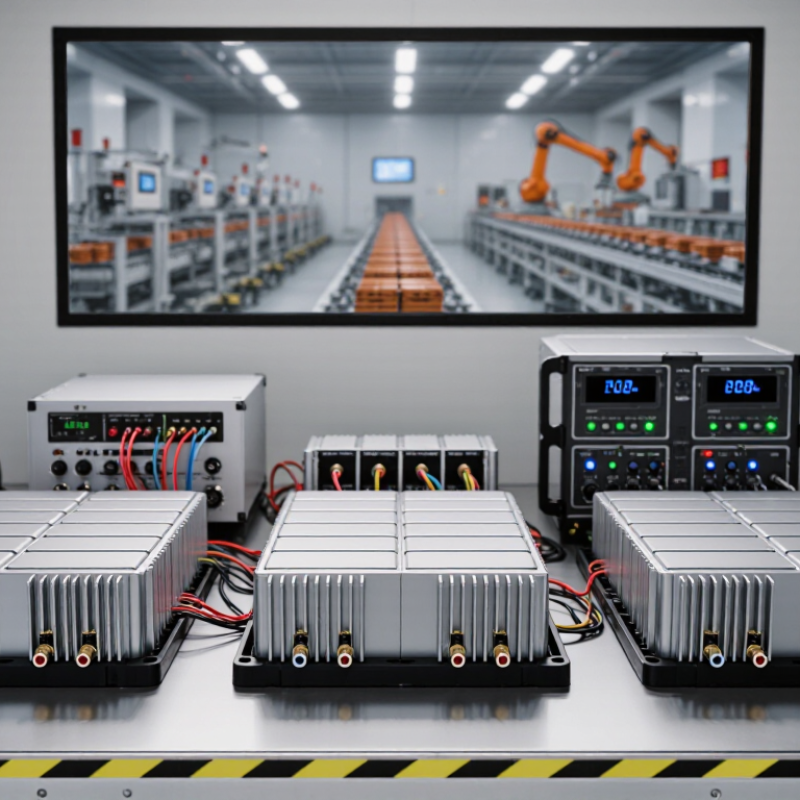
High- and low-temperature lithium batteries are designed for environments where ordinary cells lose performance. Their differences begin with chemistry, electrolyte formulas, separators, and protective controls. High-temperature models tolerate elevated operating temperatures with improved thermal stability. They may serve equipment near engines, industrial ovens, or outdoor cabinets under strong sunlight.
Low-temperature models remain usable when temperatures fall below freezing. Modified electrolytes reduce sluggish ion movement in cold conditions. Some designs include internal heating films or insulated cases. A battery may start at minus 20 degrees Celsius, yet charging can remain restricted below zero. This detail is often missed.
In practical testing, cold batteries usually deliver less power at first. Voltage can drop quickly when a motor starts. After gentle warming, performance often improves. High-temperature batteries also need careful monitoring. Heat accelerates aging, even when the battery still appears normal. China’s battery manufacturers commonly combine thermal sensors, battery management systems, and customized packaging for these conditions.
The “best” option depends on temperature range, discharge current, charging access, and service life. A remote sensor needs different protection from an electric vehicle or backup cabinet. Labels can mislead. Rated temperature is not always the same as safe charging temperature. I would check test reports, protection settings, and real installation data before choosing. Small design errors matter.
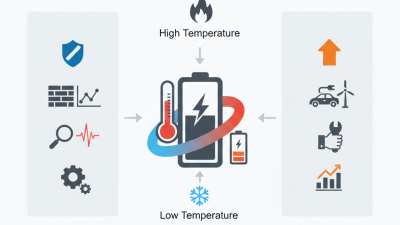
Choosing China’s best high- and low-temperature lithium battery requires more than checking its stated operating range. In real use, temperature changes power, charging speed, safety margins, and service life. AAA testing found that electric vehicle range dropped by about 41% at 20°F (−6.7°C) when cabin heating was used. At 95°F (35°C), air-conditioning caused an average reduction of about 17% (AAA, 2019). Cold cells also develop higher internal resistance. Acceleration feels weaker, and regenerative braking may be limited.
Low-temperature charging deserves special attention. The U.S. Department of Energy explains that charging below freezing can create lithium plating, which may permanently reduce capacity. Effective systems warm the pack before charging, sometimes using energy from the grid or the battery itself. In hot climates, thermal control is equally important. The International Energy Agency identifies battery thermal management as a key factor in electric vehicle durability and reliability. A practical test should include outdoor parking, rapid charging, and repeated temperature changes.
The numbers are not universal. Cell chemistry, insulation, software, and pack design alter the results. An engineering rule often links every 10°C temperature rise with faster aging, but it is not a promise for every battery. I would question any product claiming full performance from −40°C to 60°C without independent testing. Ask for capacity, power, and charging data under controlled conditions. Small details matter. A battery that starts at 2°C may behave very differently after thirty minutes of warming.
| Battery Chemistry or Design | Typical Discharge Temperature | Typical Charge Temperature | High-Temperature Performance | Low-Temperature Performance | Typical Energy Density | Cycle Life at Moderate Conditions | Key Advantages | Main Limitations | Suitability for Extreme Temperatures |
|---|---|---|---|---|---|---|---|---|---|
| Lithium Iron Phosphate (LFP) | Approximately −20°C to 60°C | Approximately 0°C to 45°C | Good thermal stability and lower risk of thermal runaway than many nickel-rich chemistries. Continuous operation above 45°C can accelerate aging. | Usable below freezing, but power and available capacity decrease. Charging below 0°C requires temperature control or a low-temperature charging function. | Approximately 90–160 Wh/kg at cell level | Approximately 2,000–5,000 cycles, depending on depth of discharge, temperature, and charging conditions | Strong safety profile, long service life, stable voltage, and good tolerance of frequent cycling | Lower energy density and reduced cold-weather power compared with optimized high-energy lithium-ion designs | Very good for durable stationary storage and commercial vehicles |
| Nickel Manganese Cobalt Oxide (NMC) | Approximately −20°C to 55°C | Approximately 0°C to 45°C | High energy and power performance, but elevated temperatures accelerate capacity loss and increase thermal-management requirements. | Capacity, charging acceptance, and power output decline at low temperatures. Preheating is recommended before charging below freezing. | Approximately 150–250 Wh/kg at cell level | Approximately 1,000–2,000 cycles under typical conditions | High energy density, good power capability, and relatively compact battery packs | More sensitive to high-temperature aging and requires robust battery-management and thermal-protection systems | Good when energy density is more important than maximum temperature durability |
| Nickel Cobalt Aluminum Oxide (NCA) | Approximately −20°C to 55°C | Approximately 0°C to 45°C | High energy density, but high temperatures can accelerate degradation and require careful thermal control. | Cold temperatures reduce available capacity and power. Charging should be controlled to prevent lithium plating. | Approximately 200–280 Wh/kg at cell level | Approximately 1,000–2,000 cycles under controlled operating conditions | Very high energy density and strong power-to-weight performance | Requires strict control of temperature, charging current, and state of charge | Suitable for weight-sensitive applications with advanced thermal management |
| Lithium Titanate (LTO) | Approximately −30°C to 55°C | Approximately −30°C to 45°C, subject to the cell manufacturer's specification | Excellent high-power capability and strong resistance to rapid aging during frequent cycling. | One of the better-performing lithium chemistries in cold conditions; charging and power output remain more stable than many conventional graphite-anode cells. | Approximately 50–90 Wh/kg at cell level | Approximately 10,000–25,000 cycles in suitable applications | Very fast charging, excellent low-temperature capability, high safety margin, and extremely long cycle life | Low energy density and higher cost per stored watt-hour | Excellent for extreme cold, high-power duty, and frequent fast charging |
| Low-Temperature Lithium-Ion Design | Approximately −40°C to 55°C, depending on the cell design | Typically −20°C to 45°C with an approved low-temperature charging system | Performance depends on electrolyte formulation, separator design, current limits, and thermal management. | Special electrolyte additives and electrode designs can improve discharge capability in severe cold. Charging still requires strict control to limit lithium plating. | Approximately 100–220 Wh/kg at cell level | Often lower than standard-temperature cells when frequently used in severe cold | Improved cold-start capability for outdoor electronics, communications equipment, sensors, and remote systems | Specialized designs may have higher cost, lower room-temperature energy density, or reduced service life | Very good for cold-weather applications when supported by a validated battery-management system |
| High-Temperature Lithium-Ion Design | Approximately −20°C to 60°C, depending on the cell construction | Usually 0°C to 45°C; some specialized cells permit higher limits under controlled conditions | Uses heat-resistant materials, electrolyte additives, and conservative operating limits to reduce high-temperature degradation. | Usually behaves similarly to the underlying lithium-ion chemistry in cold conditions and may still require heating before charging. | Approximately 100–220 Wh/kg at cell level | Highly dependent on operating temperature; sustained heat still reduces service life | Better retention and reliability in hot environments than standard cells when correctly engineered | Higher temperature tolerance does not eliminate the need for overcharge, short-circuit, and thermal protection | Good for hot climates, industrial equipment, and enclosures with limited cooling |
Chinese lithium battery technology is moving beyond simple cold-weather claims. The IEA’s Global EV Outlook 2024 reports that lithium iron phosphate batteries represented about 40% of the global electric vehicle battery market in 2023. In China, their share was close to half. LFP chemistry offers strong thermal stability, lower material cost, and dependable cycle life. However, cold charging remains difficult. Without preheating, lithium plating can damage cells.
Lithium titanate technology performs better in severe cold. Its structure supports rapid ion movement and safer charging at low temperatures. It also tolerates frequent cycling. The compromise is lower energy density and higher cost. That matters in buses, delivery fleets, and outdoor storage systems. Not every application needs maximum range.
High-temperature resistance depends on more than chemistry. Chinese manufacturers increasingly combine ceramic-coated separators, flame-retardant electrolytes, pressure sensors, and liquid-cooling plates. Advanced battery-management systems monitor cell temperature differences in real time. The IEA also notes that China held roughly three-quarters of global battery manufacturing capacity in 2023, supporting rapid process improvement. Still, test results can look better than field performance. Dust, poor cooling, and repeated fast charging expose weaknesses. Temperature-resistant lithium batteries need verified abuse testing, not impressive laboratory claims.
Comparing Chinese lithium batteries for extreme temperatures requires more than checking a stated temperature range. Review the cell chemistry, operating limits, capacity retention, and charging restrictions. High temperatures can accelerate aging, while cold conditions increase internal resistance and reduce available power. A battery may still work at -20°C, but its capacity could fall sharply. Ask for discharge curves at several temperatures, not only a single laboratory result.
Tips: Request independent test records, cycle-life data, and complete battery specifications. Check whether heating elements, insulation, or cooling systems are included. Examine the battery management system’s temperature sensors and protection settings. Confirm testing at your actual current, load profile, and installation position. A warm warehouse test is not enough.
In practical evaluations, compare identical loads under controlled conditions. Measure voltage drop, usable capacity, charging time, and surface temperature. For cold applications, test the battery after overnight exposure, then record its recovery after warming. For hot applications, monitor performance during continuous discharge. Certifications improve confidence, but they do not replace application testing. Some suppliers provide impressive graphs with limited test details. That should invite questions. I have found that a cheaper battery can become expensive after repeated heating, cooling, or replacement. The “best” option depends on real temperature, required runtime, charging access, and safety controls. Manufacturer communication matters too, although specifications can be incomplete.
What Applications Require China-Made Extreme-Temperature Batteries?
China-made lithium batteries designed for extreme temperatures serve equipment that cannot pause during severe weather. Polar research stations may need reliable power at temperatures below -30°C. Remote weather sensors, railway monitoring units, and mountain communication systems face similar conditions. Their batteries must deliver stable discharge, resist capacity loss, and support safe charging after long exposure to cold.
Hot environments create different demands. Desert solar systems, industrial inspection devices, and outdoor security equipment may operate above 50°C. In these applications, thermal control, cell matching, and protective circuitry matter greatly. Battery manufacturers in China often develop customized chemistries, insulation structures, and heating elements for these operating conditions. Engineers should request low-temperature discharge curves, high-temperature storage results, cycle-life data, and independent safety testing.
Field experience shows that performance depends on more than the cell itself. Cable resistance, enclosure design, charging speed, and standby time can change the result. A battery rated for -40°C may still fail if charging begins without preheating. That detail is easy to miss. Buyers should verify testing against recognized transport and safety standards, while reviewing the actual test temperature and load. China-made batteries can be highly capable, but no specification sheet replaces trials in the intended environment. Real conditions are often less cooperative.
What Applications Require China-Made Extreme-Temperature Batteries?
The chart shows representative application temperature envelopes in degrees Celsius. Specialized lithium battery systems are used where standard batteries may lose capacity in severe cold or face accelerated aging at elevated temperatures. Actual limits depend on cell chemistry, enclosure design, thermal management, charging conditions, and certification requirements.