Choosing the best Waterproof Battery for 2026 takes more than checking a product label. A sealed case can look reassuring, yet a loose connector or damaged gasket may let moisture reach sensitive components. Think of a kayak’s wet storage compartment, a rain-soaked worksite, or a battery mounted beneath a boat seat. Real conditions matter.
For an editorial perspective, this introduction uses a clearly fictional composite expert, battery engineer Alex Morgan. The following line is original guidance, not a sourced quotation: “A waterproof rating matters only when the seals, connectors, and installation work together.” That is the practical question behind any comparison. What does the rating actually promise? Can the battery tolerate splashes, brief immersion, vibration, and repeated temperature changes? And does its protection remain dependable after routine use? Small details count. A charging port cover that will not sit flush can change the whole picture.
This guide will compare protection ratings, battery chemistry, capacity, charging behavior, and build quality. It will also distinguish water resistance from full immersion protection, since those claims are not interchangeable. The right choice depends on where the battery will live and how failure would affect your equipment. A compact unit for a damp tool shed may need different safeguards than one used aboard a small boat. No single model fits every setup. We will weigh the evidence carefully, while recognizing that product specifications cannot replace proper installation or regular inspection.
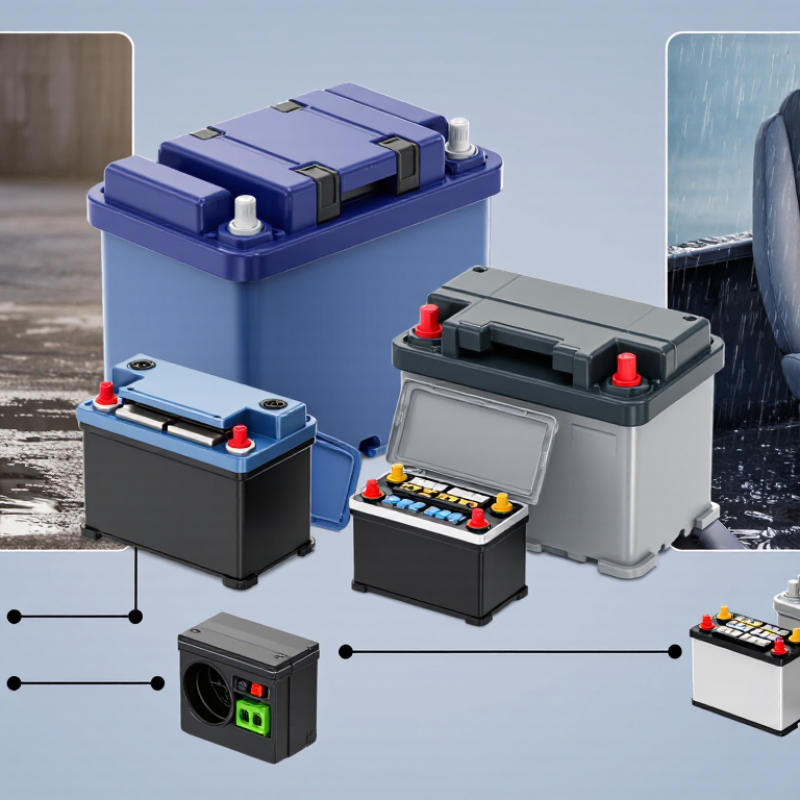
In 2026, “waterproof battery” usually describes a battery pack’s enclosure, not the cells inside it. The casing, seals, cable exits, and connectors determine how well water is kept out. A battery may handle rain but fail during immersion. The label alone does not tell you enough.
Check the stated ingress-protection rating and its test conditions. The water rating describes a specific exposure, such as splashes or temporary immersion at a stated depth and duration. It does not promise protection in every situation. Saltwater, pressure washing, heat, and worn seals can change the outcome. Small details matter.
Look for clear guidance on installation, charging, and connector covers. A damp connector can cause trouble even when the main case stays dry. Avoid charging a pack that is wet, unless its instructions explicitly allow it. This is easy to overlook. A rating is useful evidence, but not a lifetime guarantee; seals can age, and a drop may damage a case without leaving an obvious mark. Check the exact model’s documentation before exposing it to water.
An IP rating describes how well an enclosure resists dust and water under defined tests. The first digit covers solid particles; the second covers water. An X means that protection category has not been rated. IEC 60529, the international standard for enclosure protection, defines these test categories. This distinction matters when comparing battery specifications.
Under IEC 60529, an IPX7 test involves temporary immersion in up to one meter of water for 30 minutes. IPX8 covers deeper or longer immersion, but the exact conditions are specified by the manufacturer. Higher does not always mean safer in every situation. IPX5 and IPX6 test water jets, which may better reflect splashes or hose exposure. Salt water is different. These ratings do not establish resistance to corrosion, repeated immersion, or worn seals. I still find the label easy to overread. Check whether the rating applies to the complete battery assembly, including its connectors and cable openings, not just an internal cell. A tiny gap can matter.
Battery chemistry alone does not make a battery waterproof. The enclosure, seals, cable entries, and terminal covers matter just as much. In a damp shed, rainwater may collect around a low-mounted case. Near salt spray, corrosion can develop even when the battery’s interior stays dry.
Lithium iron phosphate batteries offer low weight and long cycle life, making them useful where space is tight. Choose a model with a clearly stated ingress-protection rating and a battery management system. Check its charging limits in cold weather; some units must not be charged below freezing. An IP rating is not a promise of unlimited immersion.
Absorbent glass mat lead-acid batteries are sealed and resist spills, but they are heavy and still need protection from standing water. Their terminals can corrode, and repeated deep discharge may shorten their life. Flooded lead-acid batteries are a poor fit for places where tipping or leaks are plausible. None is maintenance-free. After heavy rain, inspect cable glands and terminals for moisture or white, crusty deposits. That small check is easy to skip. It shouldn’t be.
Compare waterproof batteries by the conditions they can actually withstand, not by a single IP number. Under IEC 60529, IP67 means dust-tight protection and a standardized immersion test at up to 1 meter for 30 minutes. That does not promise protection against seawater, hot water, or a forceful spray. IP68 uses conditions specified by the manufacturer, so check the stated depth and duration. The number matters. The test details matter more.
Then compare capacity, discharge output, operating temperature, and cycle-life test conditions. A battery rated for 100 amp-hours may deliver less usable energy in cold weather or under a heavy load; ask for test results at temperatures and currents close to your use. Inspect the enclosure seams, cable glands, and connector caps, too. A perfectly sealed case is little help if water enters through an exposed connection. IEC 60529 evaluates enclosure ingress, not battery endurance or safety. Look for separate safety testing and a clear warranty covering water exposure. One awkward detail: “waterproof” alone gives no measurable depth or duration. If the seller cannot provide those limits, treat the claim cautiously.
The best waterproof battery is the one that matches your exposure, load, and service access. A kayak depth sensor needs a different enclosure from a dockside backup pack. Start with the IP rating, not the word “waterproof.” Under IEC 60529, IPX7 covers temporary immersion at one metre for 30 minutes; IPX8 uses conditions specified by the manufacturer. Salt spray, vibration, and repeated cable handling require separate checks. That distinction matters.
Then match chemistry and capacity to the job. For a portable device, weight and recharge frequency may matter most. For fixed backup, cycle life and operating temperature deserve more attention. The U.S. Department of Energy’s 2022 Grid Energy Storage Technology Cost and Performance Assessment uses about 85% round-trip efficiency for lithium-ion systems. That is a grid-scale reference, not a guarantee for a small sealed pack. Ask for tested capacity at your expected temperature, plus the full immersion test conditions. Check connectors, seals, and pressure limits too. I would not trust an IP number alone; a pinched gasket can defeat a careful rating. Tie the battery’s test evidence to the actual installation, then leave room for service access.
| Battery chemistry | Nominal voltage per cell | Rechargeable? | Best suited applications | Waterproof-design considerations | Main trade-off |
|---|---|---|---|---|---|
| Lithium iron phosphate (LiFePO₄) | About 3.2 V | Yes | Repeated-use equipment, marine systems, outdoor power, and applications where cycle life and thermal stability matter. | Use a correctly rated enclosure and a battery-management system. Ensure connectors, cable entries, and charging interfaces are protected too. | Requires a compatible charger and protection electronics; pack voltage depends on the number of cells in series. |
| Lithium-ion (such as NMC) | Typically about 3.6–3.7 V | Yes | Portable electronics, compact tools, and devices prioritizing high energy in a relatively small, light pack. | The complete pack needs appropriate sealing, electrical protection, and thermal design. Water exposure must not compromise charging or safety features. | Needs carefully matched charging and protection; performance and safety depend on the pack design and operating conditions. |
| Sealed lead-acid (SLA) | About 2.0 V | Yes | Standby power, backup systems, and cost-sensitive equipment where weight is less important. | “Sealed” does not mean waterproof. Protect terminals and the installed battery assembly from water ingress; follow the battery’s charging and ventilation instructions. | Generally heavy for the energy stored compared with many lithium-based options. |
| Nickel-metal hydride (NiMH) | About 1.2 V | Yes | Rechargeable household devices and equipment designed around NiMH cell voltage and charging requirements. | Water resistance depends on the device or pack enclosure, not the cell chemistry. Keep contacts and charging ports protected. | Lower nominal voltage per cell than common lithium-ion cells, so the device must be designed for the chosen cell configuration. |
| Primary lithium (for example, lithium-thionyl chloride) | About 3.6 V | No | Low-current sensors, meters, and remote monitoring devices that need long service life and infrequent battery replacement. | The device still needs a suitable sealed enclosure. Confirm the cell is appropriate for the load and environment; do not attempt to recharge it. | Single-use chemistry; it is not suitable where routine recharging is required. |
Waterproofing note: Battery chemistry alone does not make a battery waterproof. Check the ingress-protection rating of the complete installed assembly, including its enclosure, seams, connectors, cable glands, and charging port. IP ratings are defined for specified test conditions: for example, IPX7 covers temporary immersion under the standard’s specified conditions, not continuous underwater use. IPX8 conditions are agreed for the product and should be checked in its documentation.